Applications for the Food Justice for Kids Prize are now closed.
The Prize will award grants up to $100K each, over 2 years, to as many as 14 nonprofits, Tribes, schools, and school districts in the United States and its territories working to ensure all children can access, learn about, and engage with nutritious, culturally relevant food at school and in communities.
We look forward to announcing the winners in October 2026—stay tuned!
Focus areas
Indigenous Food Justice: Projects and policy work supporting kids advancing food sovereignty, or engaging with, gathering, growing, and cooking Indigenous foods.
Nutrition Education & School Food: Projects and policy work supporting kids learning, growing, and cooking healthy and culturally relevant foods; eating nutritious and culturally relevant school meals and integrating local food in schools; or improving access to school meals.
Why food justice for kids?
We envision the United States as a country where all children can access nutritious, culturally relevant foods; learn about healthy foods and sustainable food systems; have opportunities to grow, gather, and cook food; and be nourished physically, emotionally, mentally, and spiritually.
Unfortunately, this vision is far from reality. In the United States, 1 in 5 children (14.1 million) live in households where they do not have enough nutritious food to eat or know where their next meal may come from. At the same time, over half of U.S. children fall short on consumption of key food groups like fruits, vegetables, and whole grains.
Food access and diet quality are critical for children to learn, grow, and thrive at schools and in communities. Children facing food insecurity are more likely to experience developmental delays, anxiety, depression, and other chronic health outcomes.
Indigenous communities face even greater challenges. The seizing of Indigenous lands in the United States over several centuries disrupted the communities’ knowledge and cultivation of culturally specific foods and food systems, contributing to higher rates of food insecurity and risks for chronic diseases among Native American youth, including obesity and Type 2 diabetes.
The Food Justice for Kids Prize aims to support projects working to grow the next generation of food citizens. This is the second call for the Food Justice for Kids Prize.
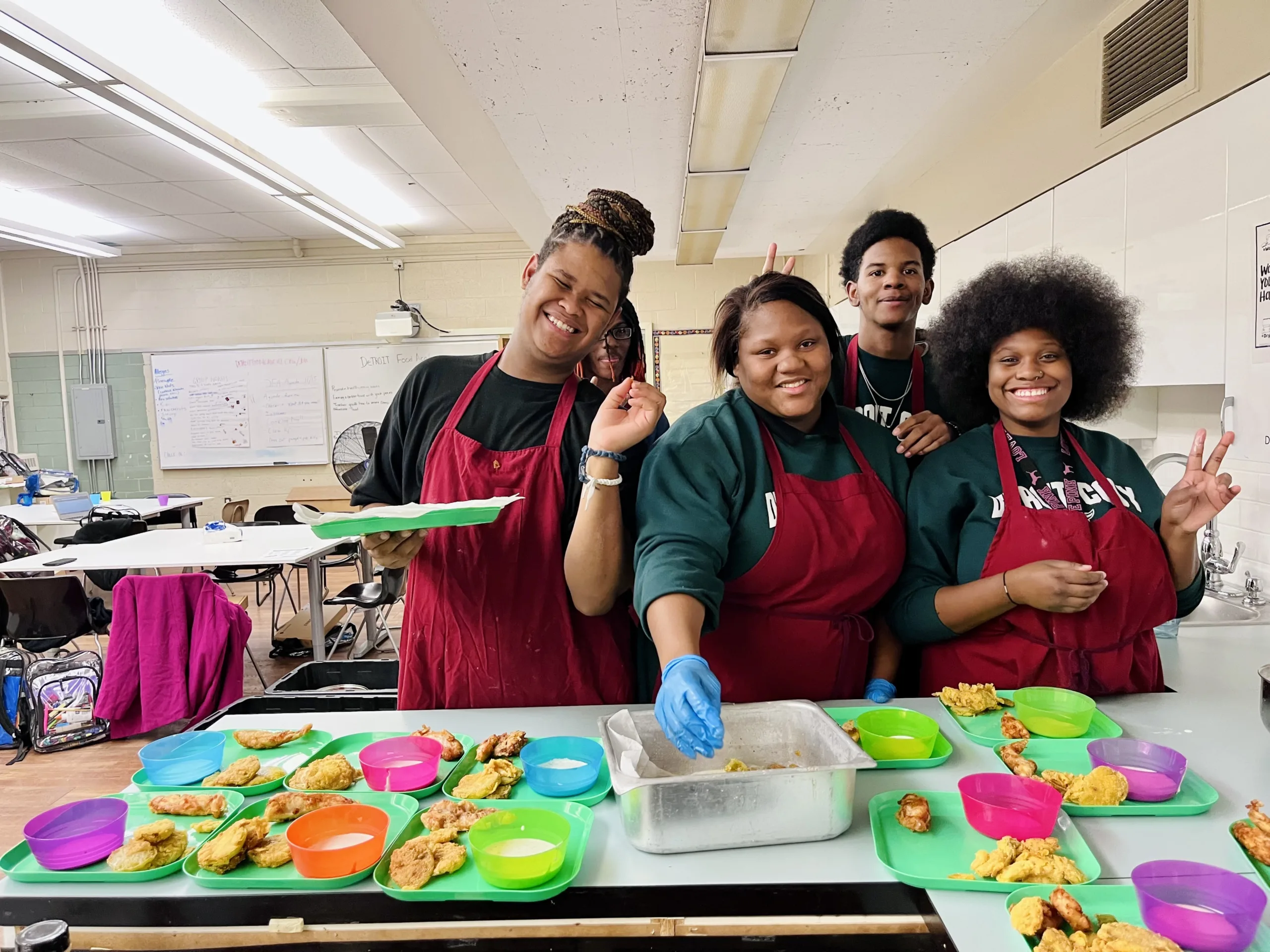
Photo courtesy of Detroit Food Academy, 2024 Food Justice for Kids Prize recipient
Frequently asked questions
Eligibility & alignment
What is the age range for “Children,” “Youth,” and “Kids”? Would you consider projects that include adults and families?
Eligible programs must primarily serve and/or benefit children under 18.
We understand that many projects advancing food justice may take a broad approach and serve or involve families, young adults, or whole communities. We welcome these projects as long as children under age 18 are the primary and majority beneficiaries.
Projects focused on strengthening the workforce supporting Indigenous Food Justice and/or Nutrition Education & School Food are eligible, as long as those professionals are working towards advancing food justice for kids under 18.
How do you define “innovation?”
“Innovation” doesn’t necessarily mean new technology or a novel approach. Whether rooted in traditional knowledge, adapted from successful models in other communities, or offering a novel approach to persistent challenges, we want to understand what makes your approach unique and its potential impact.
What do you mean by Indigenous communities?
We recognize there is no one size fits all approach to Indigenous identity and individual preferences identifiers and names may vary by individual and/or community (Native Americans in Philanthropy).
For the purposes of this application, which is open to applicants working in the US and its territories, “Indigenous” refers to American Indian, Alaskan Native, Native Hawaiian, or those who are recognized as “Indigenous” by state, local or territorial governing bodies.
What organizations are eligible to apply?
The following types of organizations are eligible to apply for the Food Justice for Kids Prize:
- 501(c)(3) Public Charities
- Federally recognized Tribes
- Indian Tribal governments (IRS, section 7871)
- US public schools, school districts, and schools with 501(c)(3) public charity status
- Governmental entities or affiliated organizations that are eligible to receive 501(c)(3) funding and do not require expenditure responsibility
- Organizations applying via a 501(c)(3) Public Charity Fiscal Sponsor
We welcome applications from all geographies within the United States, including territories—American Samoa, Guam, the Northern Mariana Islands, Puerto Rico, and the United States Virgin Islands—working at the local, state, or national level.
What organizations are not eligible to apply?
Please note, we do not fund:
- Organizations that discriminate on the basis of religion, gender, race, national origin, ethnicity, political beliefs, sexual orientation, gender identity, age, or disabilities
- Lobbying or political activities
- 501(c)(4) organizations
- Major research projects
- Any commercial business
- Any litigation that is underway, contemplated, or completed, or organizations that use litigation as a primary tool to carry out their mission
- Other private foundations, Type III supporting organizations, or other organizations that require expenditure responsibility by the Foundation
- Direct grants to individuals
- Organizations that do not comply with all laws and regulations, including those related to the USA Patriot Act, Executive Order 13224, and the U.S. Department of the Treasury Anti-Terrorist Financing Guidelines: Voluntary Best Practices for U.S. Based Charities. In this regard, the USA Patriot Act prohibits willfully providing funds for terrorism
- Specific religious activities or beliefs, or organizations that require adherence to a specific religion or belief
- Any other organization that does not meet the IRS funding requirements for a private foundation
What types of projects may not be a fit?
The Food Justice for Kids Prize supports projects focused on driving sustainable solutions that have the potential to address the root causes of food insecurity in the United States.
While projects may integrate elements of direct access solutions (such as food distribution, meal delivery, or food pantry programs) projects focusing exclusively or primarily on food distribution without a sustainability or systems change component are unlikely to be considered. For example, a food pantry program that combines food access with cooking classes for school-age children would be eligible, while a food pantry program whose sole focus was distribution would not be eligible.
Projects that have only reached the idea stage are not a fit for the Food Justice for Kids Prize—projects should have some evidence of impact (see below).
Are there any geographic focus areas within the United States?
We welcome applications from all geographies within the United States, including territories–American Samoa, Guam, the Northern Mariana Islands, Puerto Rico, and the United States Virgin Islands.
With support from The Henry P. Kendall Foundation, at least 2 of the 14 grants will be awarded to organizations within New England: Vermont, Maine, New Hampshire, Connecticut, Massachusetts, and Rhode Island.
Is the Nutrition Education & School Food focus area limited to school-related programs?
Eligible projects and policy work may focus on nutrition education, school food, or a combination of the two.
We think about school food broadly, including innovative projects that support community-based direct service, ecosystem and community power building, and/or sustainable practices that drive enhanced nutrition education and/or nutritious school food.
What kind of policy work will be considered?
Policy work that supports kids learning, cooking, and growing healthy and culturally relevant foods; eating nutritious and culturally relevant school meals and integrating local food in schools; or improving access to school meals is eligible for the Food Justice for Kids Prize. Eligible projects could be working at the local, Tribal, state, or national level.
The Hunger to Health Collaboratory will award up to 2 grants to organizations focused on state or national Nutrition Education & School Food policy work.
Please note that we do not fund lobbying, political activities, or 501(c)(4) organizations.
What do you mean by “evidence of impact?”
Projects should be beyond the idea stage and have some evidence of impact—think at least the pilot stage or beyond. This evidence of impact could be quantitative (e.g., surveys) or qualitative (e.g., interviews or focus groups) but should go beyond anecdotal evidence.
If your proposal is mainly focused on an expansion or scaling of a program that is already in process, please be sure to reference existing efforts and how you are building on them.
Can current or past grant recipients of Newman’s Own Foundation, Humanitix, The Henry P. Kendall Foundation, or the Hunger to Health Collaboratory apply?
Organizations that received $50K or more in funding from Newman’s Own Foundation or Humanitix in 2025 are not eligible to apply for the Food Justice for Kids Prize.
All other current or past grantees from Newman’s Own Foundation, Humanitix, The Henry P. Kendall Foundation, and the Hunger to Health Collaboratory are eligible to apply.
Grant details
How will grants be funded by the co-funders?
We anticipate awarding up to 14 grants:
- Newman’s Own Foundation and Humantix will award up to 5 grants to organizations focused on Indigenous Food Justice and up to 5 grants to organizations focused on Nutrition Education & School Food.
- The Henry P. Kendall Foundation will award up to 2 grants to organizations based in New England in either focus area.
- The Hunger to Health Collaboratory will award up to 2 grants to organizations focused on Nutrition Education & School Food policy projects.
Can one organization apply for multiple grants to fund different specific initiatives?
No. Only one grant application will be accepted per organization.
Is this a flexible funding grant?
Yes. Grants are awarded as flexible funding and may be used towards operating expenses, provided the funds are used in alignment with your grant application and are directly related to the program supported by the Food Justice for Kids Prize.
Is there a limit to the amount of indirect costs included in the grant?
There is no limit if your organization is a 501(c)(3) or other eligible entity—with the exception of fees charged by a fiscal sponsor, in which case the limit is 15% of the total grant amount.
Selection & timeline
How will applications be evaluated?
Applications will first be screened by Newman’s Own Foundation staff for eligibility.
We expect up to 100 reviewers representing different communities, lived experiences, issue areas, and sectors will participate in reviewing applications alongside staff from Newman’s Own Foundation, Humanitix, The Henry P. Kendall Foundation, and the Hunger to Health Collaboratory to inform the selection of grant recipients.
Applications will be scored using the following criteria:
Alignment (0-20 points): To what extent does the organization/project focus its work on children under the age of 18 and align with one of the Food Justice for Kids Prize focus areas: Indigenous Food Justice or Nutrition Education & School Food?
Innovative Approach (0-20 points): To what extent does the organization/project offer a unique approach that could improve the status quo with regard to food justice for kids?
Evidence of Impact (0-20 points): To what extent does the organization/project have demonstrable evidence of past impact and/or potential for future impact, in regard to food justice for kids and the selected program focus area?
Community Power (0-20 points): To what extent is the organization/project led by, collaborating with, and building power within the communities it seeks to serve?
Ease of Implementation (0-20 points): To what extent does the organization/project have a realistic plan with clearly defined goals, adequate resources, the right stakeholder engagement, and a clear path to progress?
Total Possible Score: 100 points
If my organization is selected as a finalist, when will the interview take place?
Finalists will be invited to interview with a committee of application reviewers. The interview is a chance for the committee to ask questions and better understand your proposal.
We expect interviews will take place virtually the week of August 10, 2026.
What can I expect if my organization is selected to receive the Food Justice for Kids Prize?
As many as 14 Food Justice for Kids Prize grant recipients will receive up to $100K over two years ($50K each in 2026, with the opportunity to apply for an additional grant of up to $50K each in Fall 2027.)
In addition to the grant, Food Justice for Kids Prize grantee partners will have the opportunity to:
- Attend the Hunger to Health Collaboratory 2026 Fall Summit, November 17 in Boston, MA with travel and lodging expenses covered.
- Participate in Newman’s Own Foundation’s virtual learning sessions and meet periodically throughout the year with fellow nonprofits, Tribes, schools, and school districts to network, share best practices, and learn.
Application, attachments, & support
What are SMARTIE goals?
“SMARTIE” stands for Strategic, Measurable, Ambitious, Realistic, Time-bound, Inclusive, and Equitable. SMARTIE Goals are a strategic way to plan and achieve your objectives.
Download the SMARTIE goals template here.
What format should I use to create a project budget for my application?
Applicants must use the template when creating a budget. Download the budget template here.
There is no specific formula for how you use the grant funding; we encourage organizations to allocate funds in a way that maximizes impact in alignment with the application.
Can I get feedback on my application before it is submitted?
We want to be fair to all applicants, so we regret to say we cannot give individual feedback on applications.
To learn more about the Food Justice for Kids Prize, watch the recording from the first February webinar here.
I have a technical problem with the JustFund application or a question that wasn’t answered above.
Before you get started, learn more about how the JustFund Common Application™ works. As part of your application, your profile information will also be submitted and dated at time of submission.
Please contact JustFund.Us at info@justfund.us with questions related to your submission. Staff are generally available Monday through Friday, 9:00AM–5:00PM ET, and will respond to relevant inquiries in the order they are received.
JustFund also hosts application support webinars twice monthly: Register here.
Nominations
Does an organization have to be nominated in order to submit an official application?
No. Organizations can apply whether or not they are nominated through the JustFund.Us application portal.
Do multiple nominations increase an organization’s chances of being selected?
No, nominations are welcome but not required and more nominations do not increase applicants’ chances. Nominations inform organizations of the opportunity to apply.
Can a nominator recommend more than one organization?
Yes, feel free to nominate as many eligible organizations as you want!
If my organization was nominated, does this mean we are eligible to apply?
Hopefully yes, but we recommend you review the Eligibility FAQ above and Official Rules to determine if your organization and project are a fit for the Food Justice for Kids Prize.