
Communicating your organization’s impact is more than sharing numbers. Data shows scale and accountability, while narrative helps create meaning. When these elements are combined, the result can be powerful and persuasive.
Part of Newman’s Own Foundation’s approach is learning with and from grantee partners— regularly hosts learning sessions to allow for the sharing of best practices, opportunities, and challenges across our community. In a recent learning session, grantee partners heard strategies to refine their approach to grant writing and storytelling to effectively communicate organizational impact to funders.
Here are 5 tips for nonprofits, Tribes, and schools looking to balance data and storytelling in grants:

1. Communicating your impact starts with measuring your impact!
- Monitoring and evaluation practices allow organizations to make data-informed decisions, demonstrate effectiveness to stakeholders, and continuously improve programs. Check out our tips for measuring impact.
- Consider trying the “sandwich” method: story / metric / story.
- Include your concrete approach and measurable outcomes in your proposal.
2. Center individual stories.
- People connect to people. Focus on one person’s experience—such as a cafeteria worker, parent, youth participant, or community member—to create a relatable, human narrative.
- Compelling stories, highlight before-and-after scenarios, surprising changes, or journeys that show the ripple effects beyond your programming.
- Use asset-based language: to emphasize strengths, for example, “children experiencing homelessness” rather than “homeless children.”
- Always ask for permission to share stories externally, and offer options for anonymity (e.g., first name only, age only, or role only.)
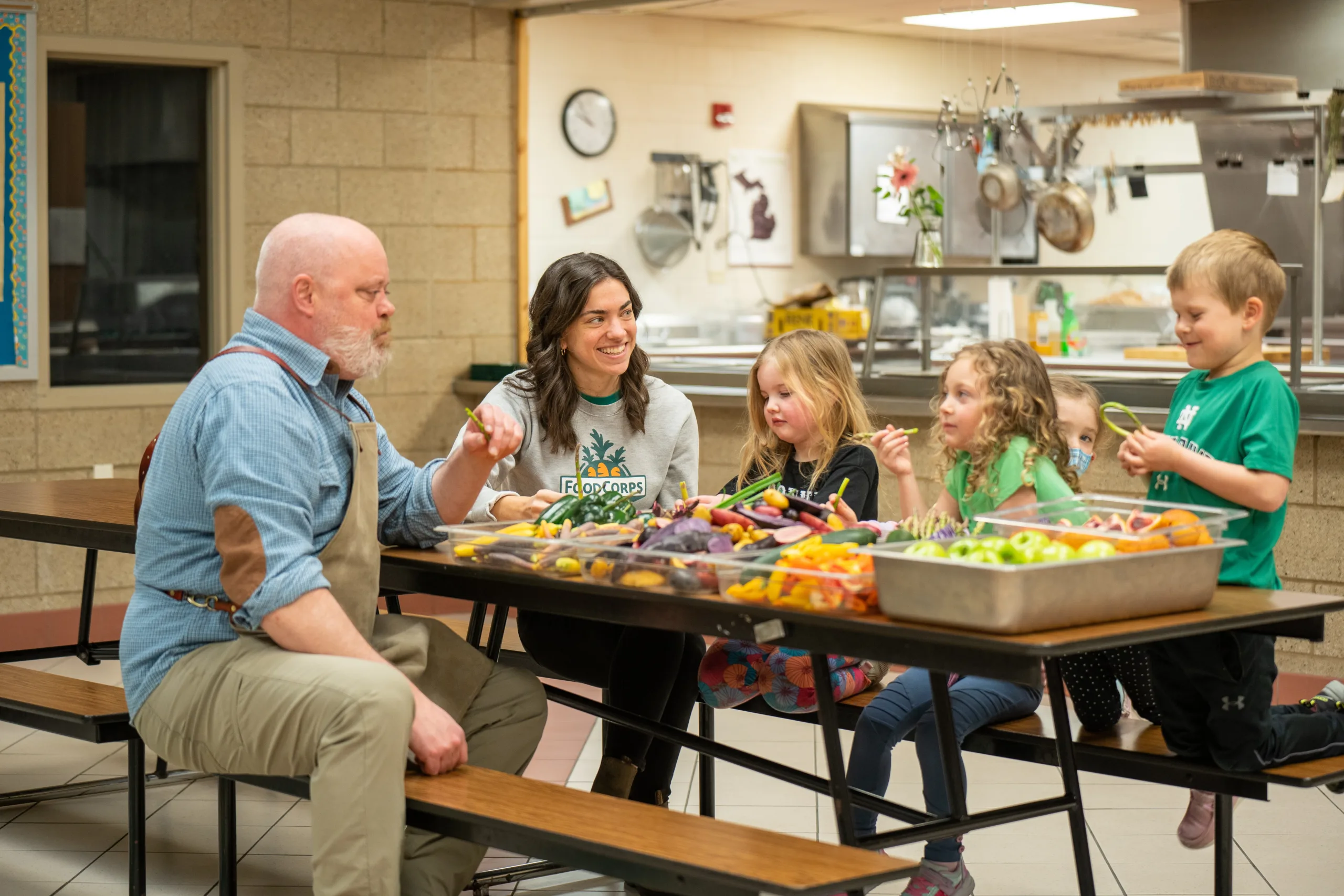
Students engage with vegetables alongside FoodCorps member and school nutrition director.
3. Mix qualitative and quantitative data to connect people to impact.
- Quantitative data (e.g., “75% of participants reported eating more fruits and vegetables after participating in the program”) helps the audience understand the impact and scope of the project
- Qualitative data helps the audience connect impact to the real people that benefited from the program.
- While both forms of data are valuable on their own, connecting metrics with stories paint a full picture of program impact.
4. Align budget and narrative.
- In grant reports and applications, make sure your budget matches your described activities. Review both side by side to confirm that requested resources directly support your proposed work, making it easy for reviewers to see the connection.
5. Utilize AI as an editor.
- After you have drafted your key points, consider using AI tools as you would a coworker or editor to copyedit, shorten, strengthen, or adapt writing for different channels.
- Don’t forget to double check for accuracy and brand voice.
Resources
- Evaluation: Tips for Measuring Impact; Data Playbook; Program Evaluation Short Course
- Writing: “Smart Brevity“; Grant Readiness Checklist
- Communications Strategy: Big Duck Nonprofit Communications; Heartwired
- Free Design Software: Canva for Nonprofits and Canva for Education; Adobe Express for Nonprofits
- AI: AI for Community trainings
Newman’s Own Foundation is a private grantmaking foundation whose mission is to nourish and transform the lives of children who face adversity. Through the efforts of Paul Newman and Newman’s Own, over $600 million has been given to social impact organizations since 1982. Today, Newman’s Own Foundation grantee partners promote nutritious food in schools, advance Indigenous food justice, and through SeriousFun Children’s Network, create medically inclusive camp experiences.